Meme Coin Trading, Lessons From a Pro Challenge
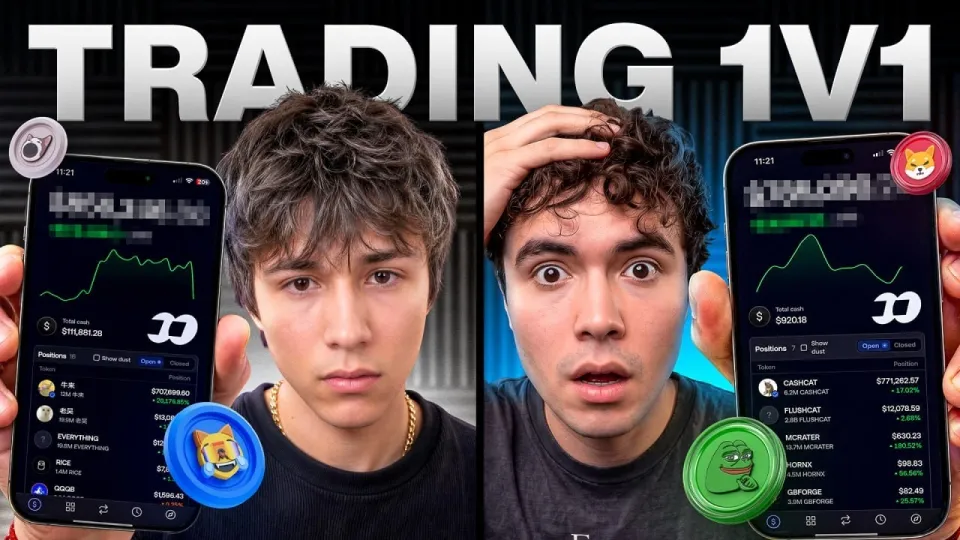
Video: I Challenged A Pro Memecoin Trader (Who Won?)
Want articles like this for your own video to promote it on YouTube and Google? Order them through the Telegram bot @sat_sit_bot. Articles with your video embedded are written and posted by the bot itself — on popular topical sites (no ads). Your first 50 articles are free.
· based on the channel insentos
Meme coin trading is short-horizon speculation on tokens whose price is driven almost entirely by attention, liquidity and timing rather than by cash flows or fundamentals. The practical takeaway from the insentos challenge video, where a professional meme coin trader is put against the host in a live session, is that the edge comes less from picking the right token and more from position sizing, fast exits and a written plan made before the entry. Anyone who wants to follow the same route can start with the fomo.family registration link used by the channel.
What meme coin trading actually is
A meme coin is a token with no product revenue, no treasury strategy and usually no team roadmap that survives contact with the market; its price reflects the crowd's willingness to hold a joke for another hour. That makes the asset class a liquidity and attention game: the same chart can be a great trade at one moment and a trap five minutes later. In the insentos session the two participants trade live while talking through their reasoning, which is the closest thing to seeing the decision layer that most tutorials hide.
Three properties separate meme coins from large-cap crypto:
- Supply concentration — a handful of wallets often hold enough of the float to move price against retail buyers.
- Thin liquidity — a pool with modest depth means a normal-sized sell order can wipe several percent off the price.
- Narrative half-life measured in hours — a token can trend on social feeds and go quiet before the next session opens.
The live challenge format and why it teaches more than a lecture
Trading out loud forces a trader to state the entry, the invalidation level and the exit before the outcome is known, which is exactly the discipline beginners lack. In the insentos video the guest keeps explaining his thought process even while managing a live position, and viewers repeatedly singled this out as the most useful part of the format. The host runs the session on Axiom (https://axiom.trade/), a trading terminal built for fast execution on Solana-style meme coin markets.
What a viewer can extract from a session like this, without copying any single trade:
- The reasoning behind an entry, not just the ticker.
- How the trader reacts when the position goes against him.
- Where the stop sits relative to the entry, and whether it is respected.
- How much of the bankroll is committed to one idea.
Risk rules that separate a plan from a lottery ticket
Position sizing is the single control that determines whether a bad week ends a trader or merely annoys them. A common working rule is to risk no more than 1–2% of the trading bankroll on any single meme coin position, because the probability of a total loss on an individual token is materially higher than in established crypto pairs. Slippage and fees compound the problem: on thin pools, a round trip can quietly cost several percent before the price has moved at all.
A practical checklist before any entry:
- Define the maximum loss in advance and size the position from that number, not from conviction.
- Check pool liquidity and holder concentration; if a few wallets control the float, treat the trade as a coin flip.
- Decide the exit before buying — both the profit target and the point where the thesis is dead.
- Avoid adding to a losing position; averaging down on a meme coin is how small losses become account-ending ones.
- Keep a written log of entries, exits and the reason for each, so patterns become visible after twenty or thirty trades.
Common doubts from new meme coin traders
The questions that come up most often around live trading videos are about legitimacy, bankroll size and whether the format can be replicated by someone with a small account. Many viewers note that streamed sessions often end in a loss and conclude the activity is closer to gambling than to trading — a fair warning, since meme coins have no valuation floor and survivorship bias is heavy on social media. Others ask whether a trader with a large following has an advantage; the honest answer is yes, attention moves price, and a retail trader cannot replicate that flow.
The realistic beginner path looks like this:
- Start with an amount you can lose entirely without changing your finances.
- Paper-trade or use a tiny size for the first weeks to learn execution speed and the feel of slippage.
- Focus on one chain and one terminal rather than spreading across five ecosystems.
- Judge yourself on process — did you follow your plan — rather than on a single profitable trade.
Useful links
- fomo.family — registration and community access via the insentos link
- Axiom trading terminal
- insentos on X
- insentos on Instagram
- insentos on TikTok
Bottom line on the meme coin challenge
The insentos challenge is useful precisely because it is unglamorous: two traders talk through live decisions, some of which work and some of which do not, and the audience sees the reasoning rather than a highlight reel. The transferable lesson is that meme coin trading rewards preparation — sizing, exits, liquidity checks — far more than it rewards conviction about a ticker. Treat streamed profits as entertainment and your own risk limits as the only number that matters. For anyone who wants to follow the same workflow, the channel's fomo.family link is the entry point, and the insentos channel itself is the author of this breakdown.
Key takeaways
- Meme coin trading is short-horizon speculation on tokens with no cash flows; outcomes depend on liquidity, timing and exit discipline more than on narrative alone.
- The insentos challenge format — a pro trader versus the host, live on a call — shows how much of the edge comes from narrating your thought process out loud.
- Tools named in the video description: Axiom (axiom.trade) for execution and fomo.family for the community/registration link.
- Viewer feedback splits into two camps: beginners who found the live commentary instructive and skeptics who call the format close to gambling.
- Recurring requests from the audience: a smaller-bankroll challenge and more beginner-focused walkthroughs.
Questions & answers
Is meme coin trading the same as gambling?
It shares traits with gambling when position size is unplanned and the outcome depends on a single spin. It becomes closer to trading when risk per position is capped, exits are defined in advance and liquidity and holder concentration are checked before entry. The mechanics are speculative either way, so only money you can lose entirely belongs in it.
How much capital do I need to start trading meme coins?
There is no minimum, but fees and slippage make very small accounts inefficient because a round trip can eat a large share of the position. A sensible approach is to start with an amount you would not miss and treat the first weeks as paid practice. Scale only after you can follow your own plan consistently.
Why do streamed meme coin sessions often end in a loss?
Live sessions are unedited, so losing trades stay in the video, while social feeds mostly show winners. Fast-moving tokens also punish hesitation, and a trader managing a call at the same time is slower than one trading alone. That is why the reasoning matters more than the result of any single session.
Which tools are used in the video?
The description points to Axiom at axiom.trade as the trading terminal and to a fomo.family referral link for registration and community access. The channel also lists its X, Instagram and TikTok accounts. Any tool is only an execution layer; risk rules still have to come from the trader.
Source: I Challenged A Pro Memecoin Trader (Who Won?) · Markdown version